
Feeling Stiff After a Car Accident? Gentle Exercises That May Help

After a car accident, you might expect to feel sore for a few days. But what happens when that soreness turns into stiffness, and everyday movements like turning your head, reaching overhead, or bending down suddenly feel uncomfortable?
Even a minor collision can leave your muscles and joints feeling tight, making it harder to move the way you normally would. The good news? With the right care and gentle movement, you may be able to gradually improve your flexibility and range of motion.
At Complete Health Chiropractic Center, we help patients understand what their bodies need after an accident and how chiropractic care, paired with appropriate at-home exercises, can support recovery.
Why Does Your Range of Motion Change After a Car Accident?
Your range of motion is simply how far and how comfortably you can move a joint in different directions.
During a car accident, your body can experience sudden forces that strain muscles, ligaments, and other soft tissues. This can lead to inflammation, muscle tension, and discomfort that limits movement.
Some common signs of reduced mobility include:
- Difficulty turning your head while driving
- Tightness in your neck, shoulders, or upper back
- Discomfort when bending or twisting
- Stiffness after sitting for long periods
- Feeling like your body just isn’t moving normally
These symptoms may not show up immediately. Sometimes, stiffness becomes more noticeable in the hours or days following a collision.
That’s why getting evaluated after an accident is important, even if your initial symptoms seem mild. Learn more about the benefits of chiropractic care after a car accident.
5 Gentle Range-of-Motion Exercises Your Chiropractor May Recommend
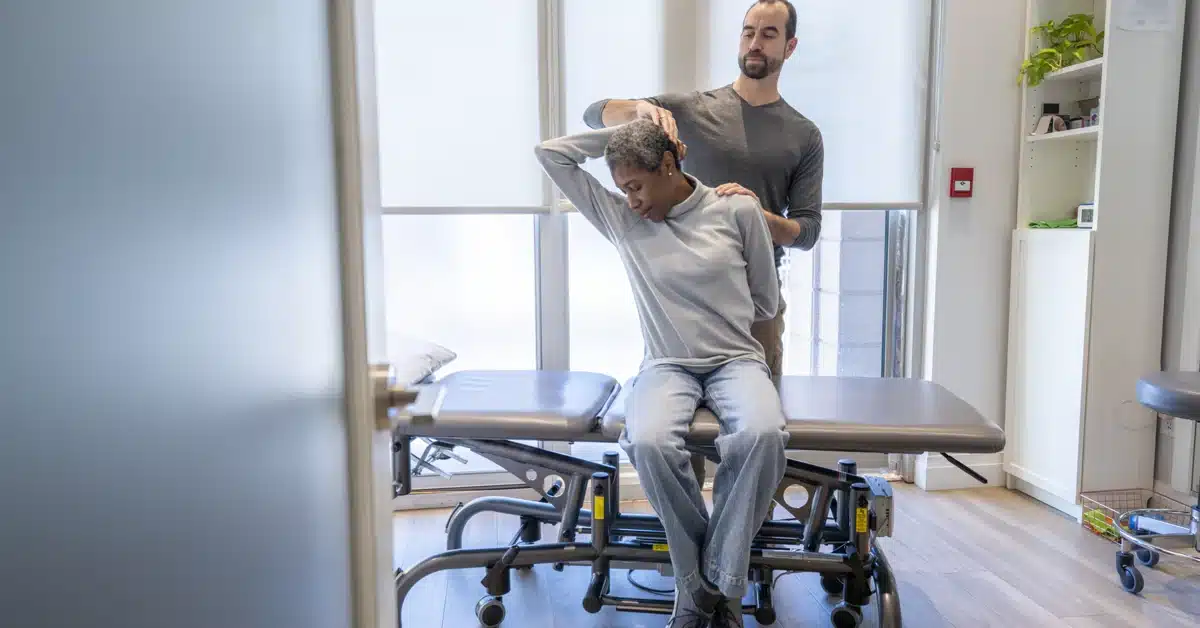
Once you’ve been evaluated and cleared for gentle movement, your chiropractor may recommend simple exercises to help maintain mobility between appointments.
Important: Not every exercise is appropriate for every injury. Avoid starting a new exercise routine after a collision until a qualified healthcare professional has assessed your symptoms and confirmed that the movements are safe for you.
1. Gentle Neck Rotations
Neck stiffness is a common complaint after a car accident, especially when whiplash is involved.
If your provider approves, slowly turn your head toward one shoulder, then return to center. Repeat on the opposite side, staying within a comfortable range.
The goal isn’t to force a bigger stretch. It’s to encourage comfortable movement without increasing pain.
2. Shoulder Rolls
Your shoulders can hold a surprising amount of tension after an accident.
Try slowly rolling your shoulders backward in a smooth, controlled motion. If comfortable, repeat in the opposite direction.
This simple movement may help ease mild muscle tightness and keep your shoulders moving throughout the day.
3. Shoulder Blade Squeezes
If you’ve been guarding your neck or upper back because of discomfort, your posture may feel different than usual.
While sitting or standing upright, gently draw your shoulder blades toward each other. Relax and return to your starting position.
This exercise can help activate muscles that support your upper back and posture.
4. Seated Ankle Pumps
Mobility exercises don’t always need to focus on your neck and back.
While seated, gently point your toes away from you, then bring them back toward your shins. Move slowly and comfortably.
Ankle pumps help maintain ankle movement and activate the lower-leg muscles, especially if you’ve been less active during recovery.

5. Gentle Walking
Sometimes, the simplest movement can be one of the most useful.
If your healthcare provider says it’s safe, short, comfortable walks may help you gradually return to your normal activity level.
Start with a manageable distance, and pay attention to how your body responds. You don’t need to push through discomfort to make progress.
How Chiropractic Care Supports Better Movement After an Accident
At-home exercises can be helpful, but they’re only one part of the recovery process.
Chiropractic care may help address certain musculoskeletal problems that contribute to stiffness and restricted movement. Depending on your condition, your chiropractor may recommend manual therapies, mobility exercises, and other approaches tailored to your needs.
At Complete Health Chiropractic Center, we understand that recovery looks different for everyone. Your treatment plan should reflect your injuries, symptoms, and progress rather than a one-size-fits-all approach.
Read more about the road to recovery with chiropractic care.
A Few Things to Remember About Exercising After a Crash
When you’re eager to feel better, it’s tempting to do too much too soon. But recovery isn’t about pushing your body as hard as possible.
Keep these reminders in mind:
- Start slowly. Gentle, controlled movements are better than forcing a stretch.
- Listen to your body. Stop if an exercise causes pain, dizziness, tingling, or worsening symptoms.
- Stay consistent. Follow the frequency and repetitions recommended by your healthcare provider.
- Don’t ignore new symptoms. Increasing pain, weakness, or numbness deserves medical attention.
If you develop severe neck pain, a worsening headache, confusion, or new neurological symptoms after an accident, seek prompt medical evaluation rather than attempting exercises.
Ready to Feel More Like Yourself Again?
Feeling stiff or limited after a car accident can make even simple daily activities frustrating. But you don’t have to figure out your recovery plan alone.
At Complete Health Chiropractic Center in Oregon City, we’re here to help you understand your symptoms, explore appropriate treatment options, and work toward moving more comfortably.
Whether you’re dealing with neck stiffness, back discomfort, or limited mobility after a collision, getting the right guidance can make a difference.
Contact Complete Health Chiropractic Center to schedule an appointment, and take the next step toward recovery.